One of my first every hardware projects, after having been programming for a while, was after I saw Ben Eater's 8-bit computer video series, it was so crazy to me that a little computer could be built on breadboards, and I wanted to learn more about how computers worked so I thought I would give it a try! Ben Eater does an incredible job explaining everything going on, and I had some much fun following along. At the end of his video series, I had a fully working computer, with 16 bytes of memory. This video is the computer running the fibonacci sequence!
After I had finished, I wanted to expand the computer to add more functionality and be able to run more complex programs. I upgraded the program counter to a full 8 bits, and I upgraded the RAM to be 256 bytes! My next step would have been to add a stack to get support for subroutines.
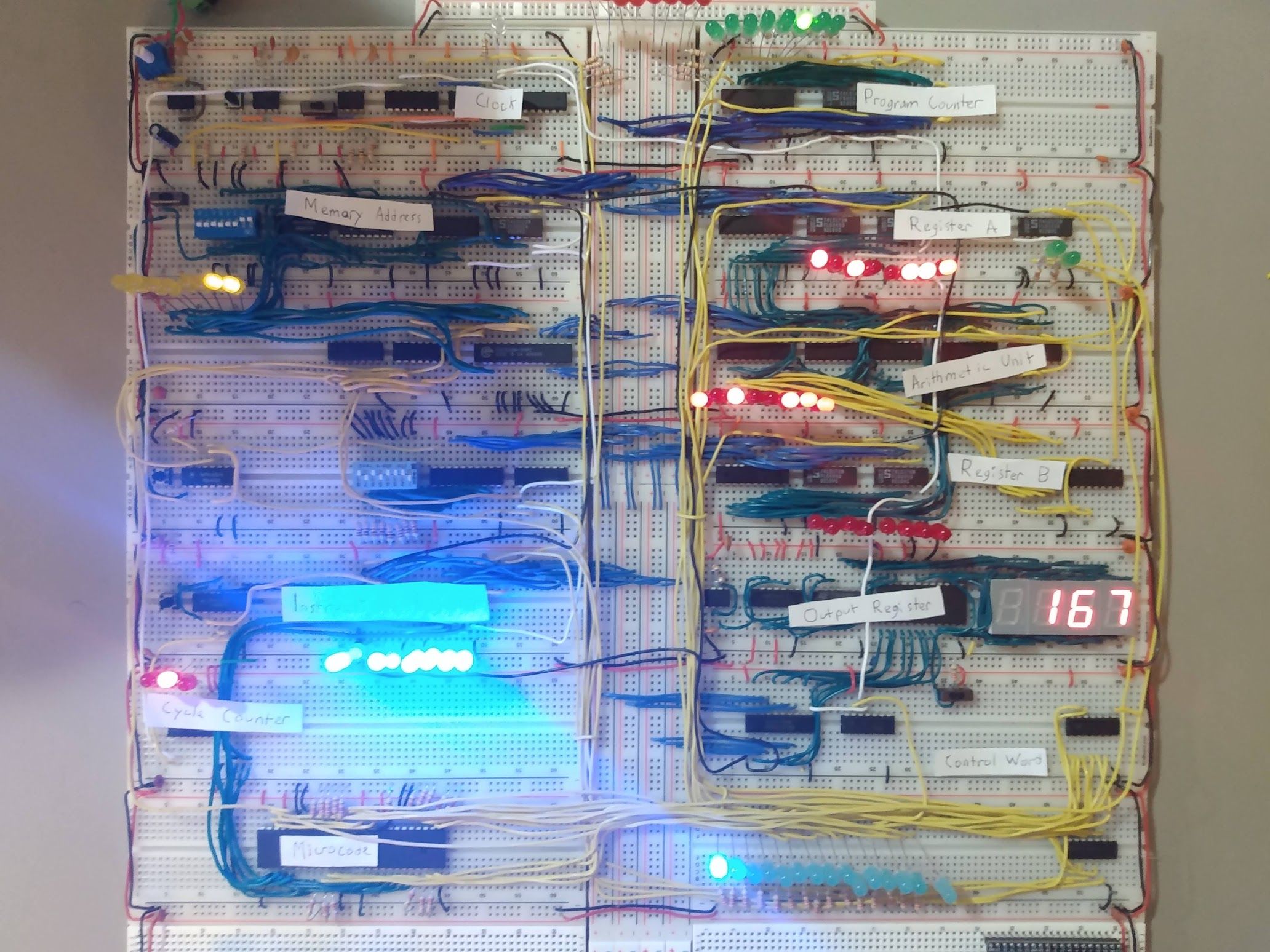
I also worked on creating a little (very very slow) programmer for the computer using an Arduino, with no EEPROM or other form of permanent memory, the entire computer's program had to be re-input using the DIP switches every time. This came with my own little assembler!
After I finished the 8-bit computer series, I had a much better understanding of how computers work, and I want to try something a little bit more advanced. I saw Ben Eater's video series about the 6502 microprocessor (same as in the Apple II, Atari 2600, Nintendo Entertainment System, and many other retro computers), but instead of copying Ben Eater's design 1 for 1, I want to try and give my own spin to it! I gave my computer 16kb of EEPROM (program storage), to hold system code, I had 32kb for regular RAM, and 8kb banked RAM (with 64 banks) to hold lots of data for processing or currently unused programs. I also had two 6522 versatile interface adapters, to talk to all the hardware, including an LCD display, PS/2 keyboard, SD card slot, and to select a RAM bank. Instead of using a full logical circuit to select which device is used at any given memory address, I instead used another EEPROM to take in the top address lines, and set a bit high or low to select a device. This allowed me to try different combinations of memory arrangement without redoing an entire circuit. As the EEPROM program memory is so low, there is a kernel which allows programs to be loaded in from the SD card into RAM. One of the programs I got working was a port of TINY BASIC, a very minimal BASIC interpreter.
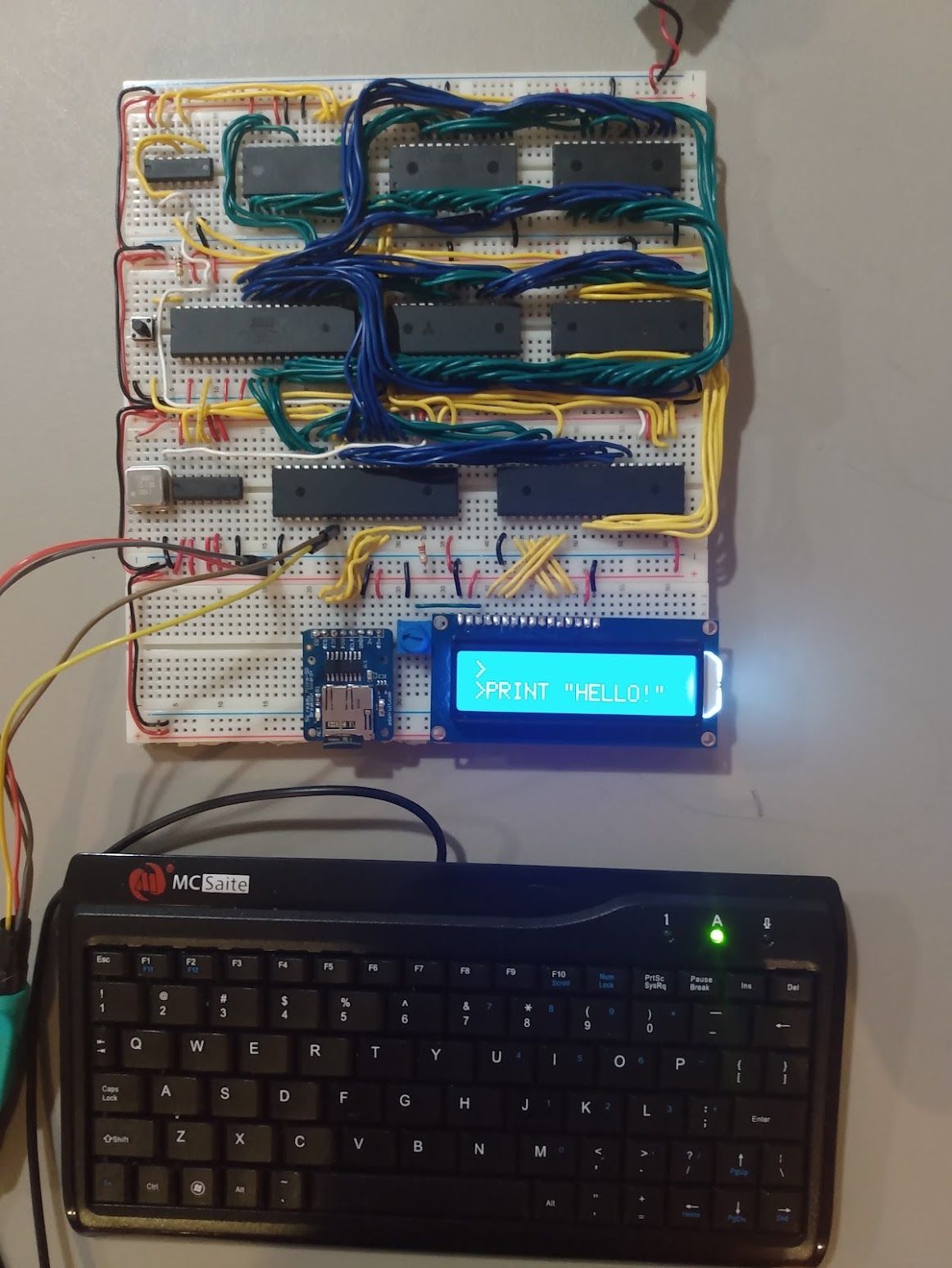
My retro computers show I am able to learn from other people, and apply the skills I've learned to new unique projects, not just copying everything word for word!