In MIE243, a second year mechanical engineering course at UofT focused on learning about mechanisms, we were tasked with designing a cinematography robot! With my past knowledge of designing, my role was to check the feasibility of the proposed designs and ensure that they would work outside the ideal world of Solidworks.
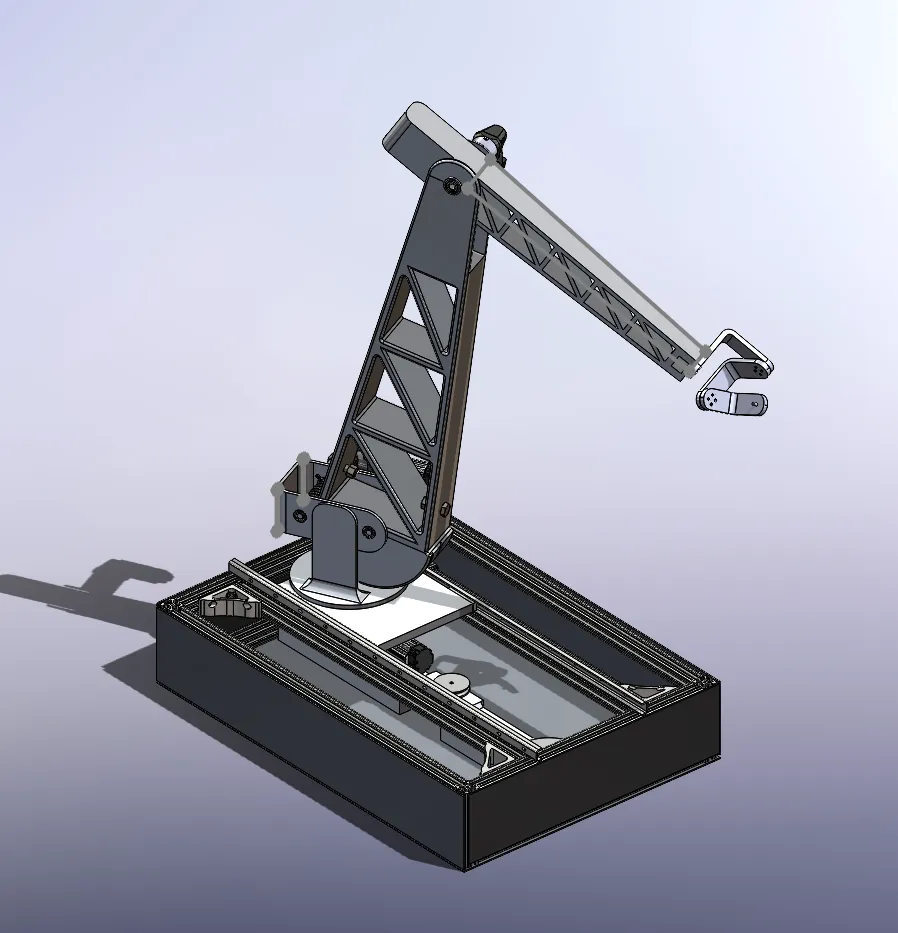
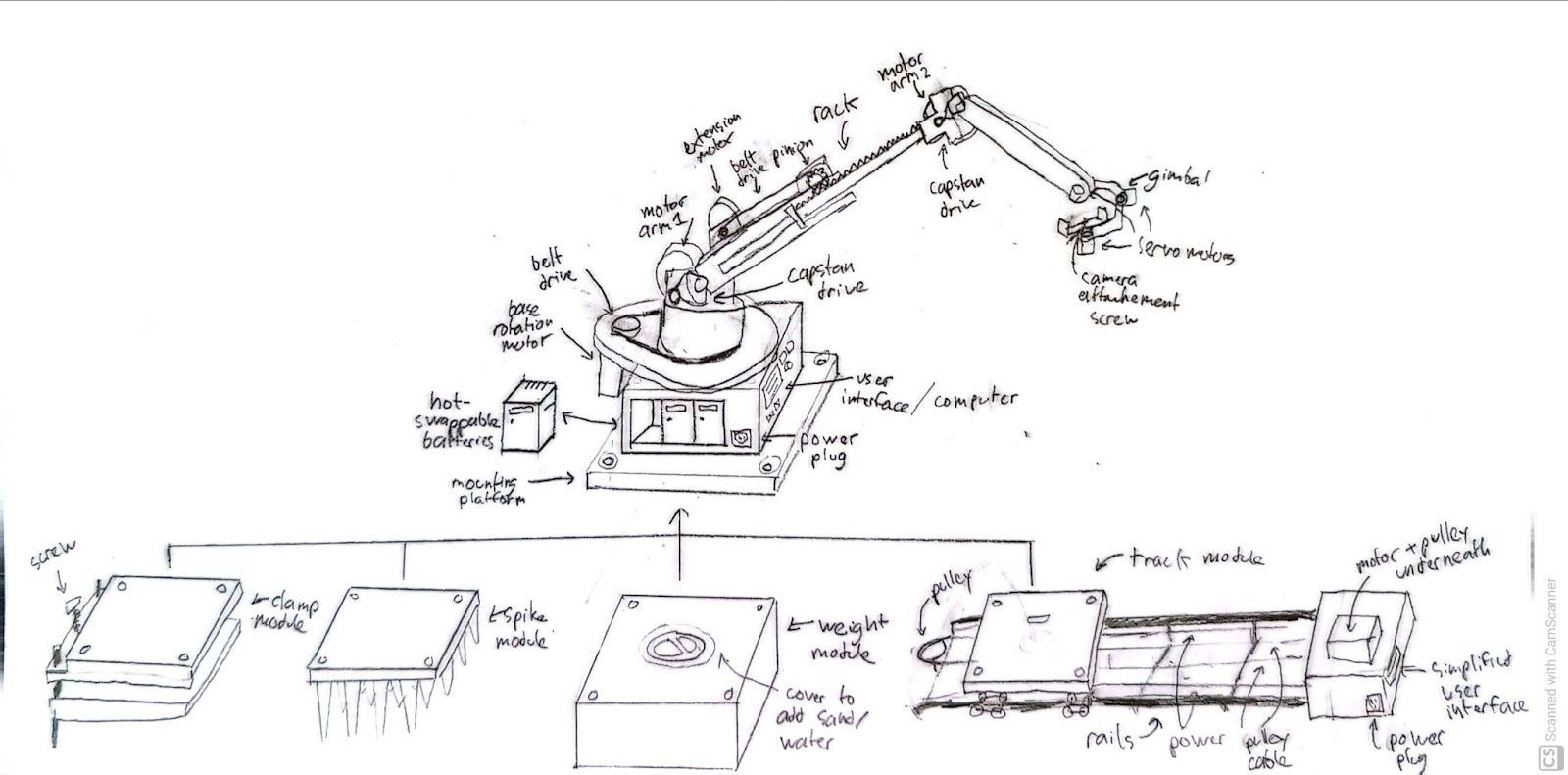
In our team, we each came up with a candidate design. My design had a lot of different parts, trying to expand the design space and give us as much as we could work with. My design included a rack and pinion to allow one of the arms to extend, with the idea that it would never extend more than halfway to ensure the arm didn't become unbalanced, but it ended up being rejected to ensure there were no rigidity concerns. I was also playing around with the idea of having multiple kinds of base plates for different environments, but that was deemed too expensive.
I had previously watched a video by Aaed Musa and his research on Capstan drives, and I was very interested and wanted to try to implement something similar in our design. The benefits of a Capstan drive is that instead of using gears between two components, it uses rope, so there is very little noise and essentially zero backlash, assuming the rope is pulled in tension. A smaller drum connected to a larger drum
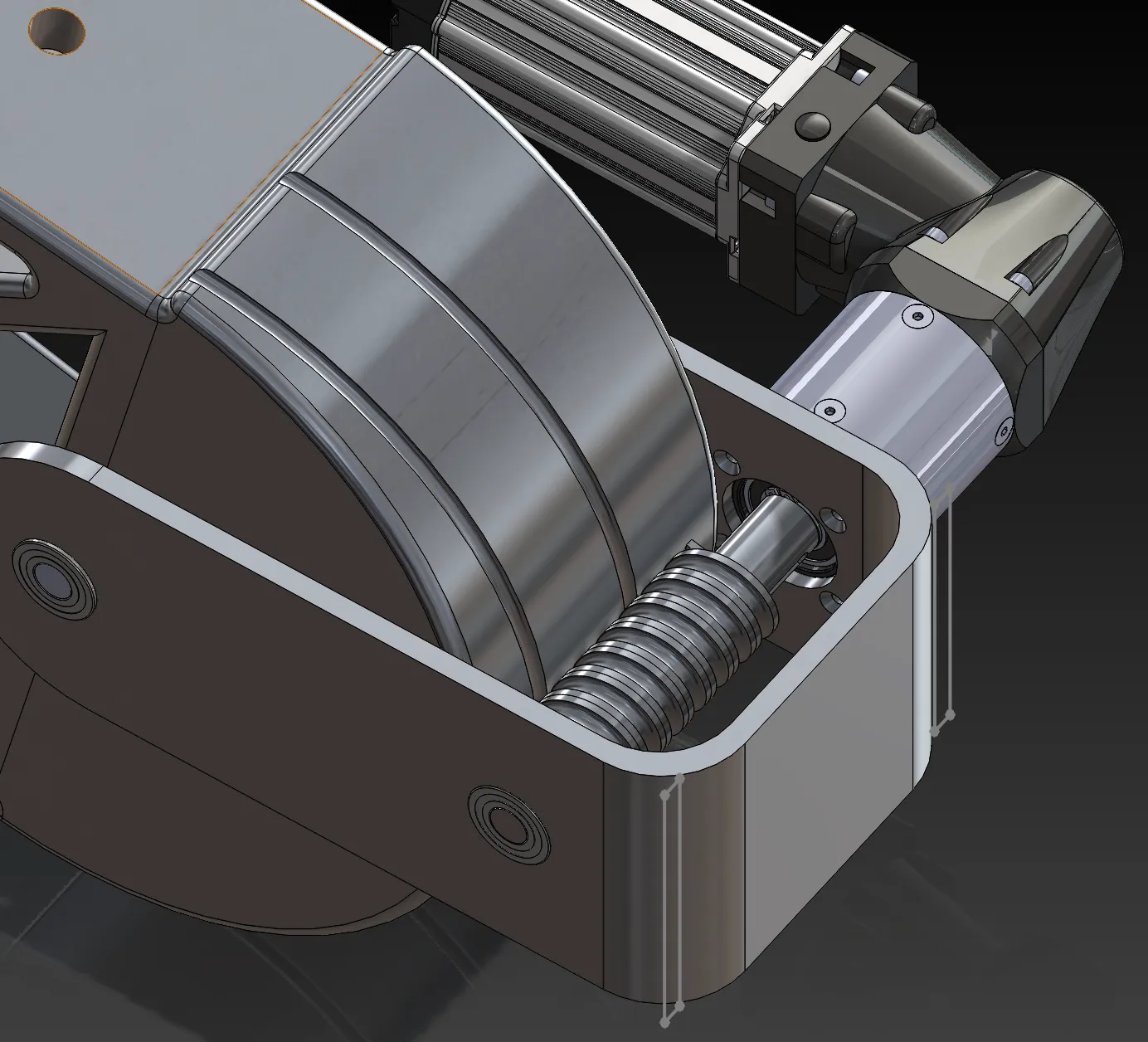
In the end, our final design we combined all the best parts from our candidate designs to create GEOFF, the Guided Electronic Optical Filography Footage (totally didn't pick the name first), consisting of a sliding base powered by a pulley system for lateral movement, a bevel gear for yaw rotations, a Capstan drive & gearbox powered by a BLDC servo motor for the first arm, a gearbox & BLDC server motor for the second arm, and some small but powerful gimbal motors to orient the camera at the end of the arm.
By completing this project, I learned a lot about creating true CAD models and designs, as opposed to Blender which I had been using in the past for manufacturing. I also learned a lot about working together with a team of people, how to manage the workload and work on a big CAD project together, where communication and documentation was critical to ensure everyone's work fit together.
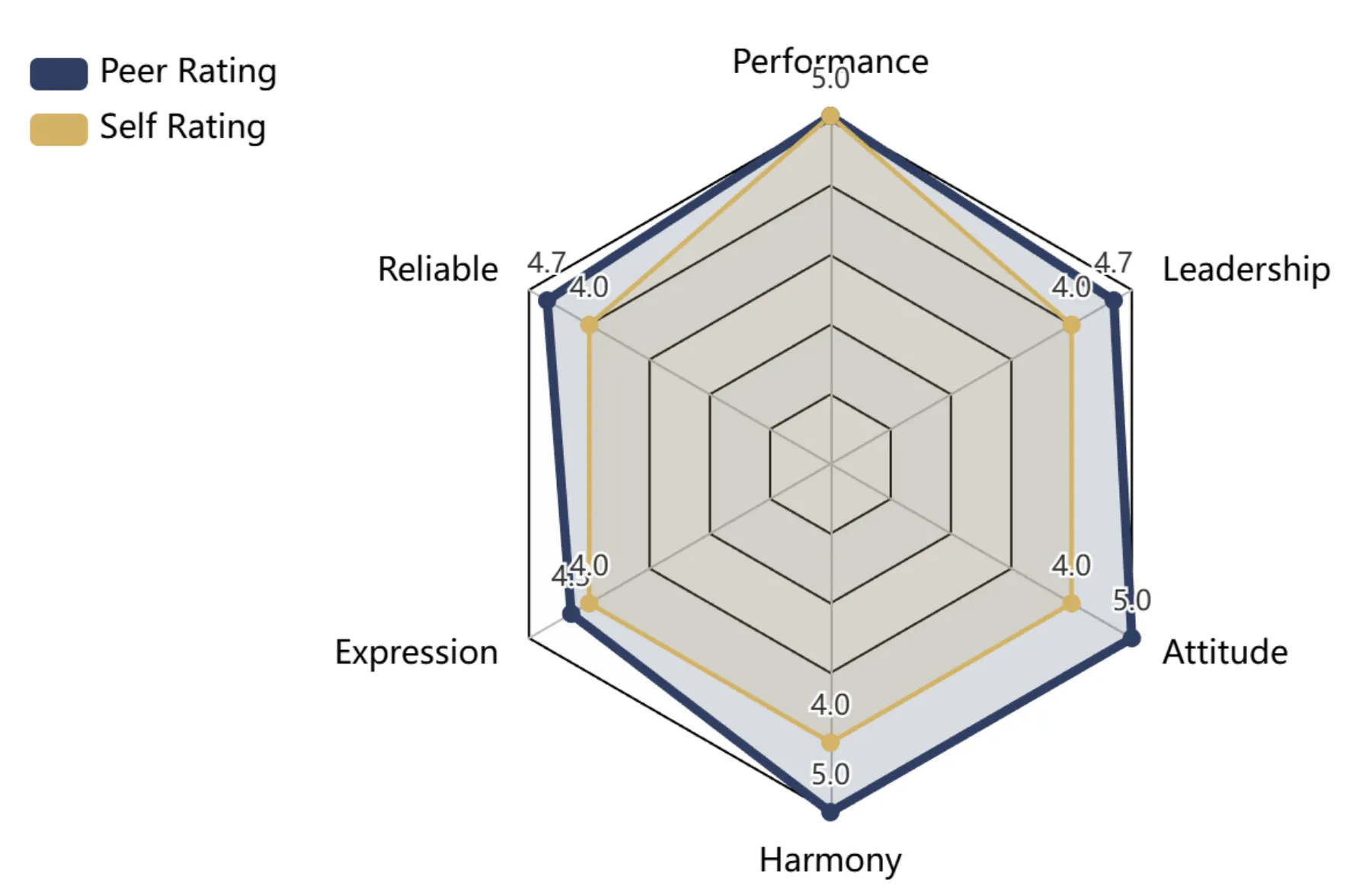
From my team, I received very positive feedback about my work! They collectively gave me a higher rating than what I thought I deserved, but I am very grateful for it! My weakest point was "Expression", which by ITP metrics is defined as being able to "Communicate effectively and share ideas and information", which I can agree with. I need to do a better job of getting my ideas down on paper and ensuring everyone is on the same page.