Something that I've always been thinking about is creating a vehicle powered by a greener energy source, rather than what we currently have. So many people drive vehicles that either create emissions as they drive, or require a great deal of effort into manufacturing their batteries. Back at the end of 2023, I read an article about sand batteries, which is basically a huge mass of sand that stores energy as heat, and I thought I want to try to apply that to a vehicle, so I started working on this project!
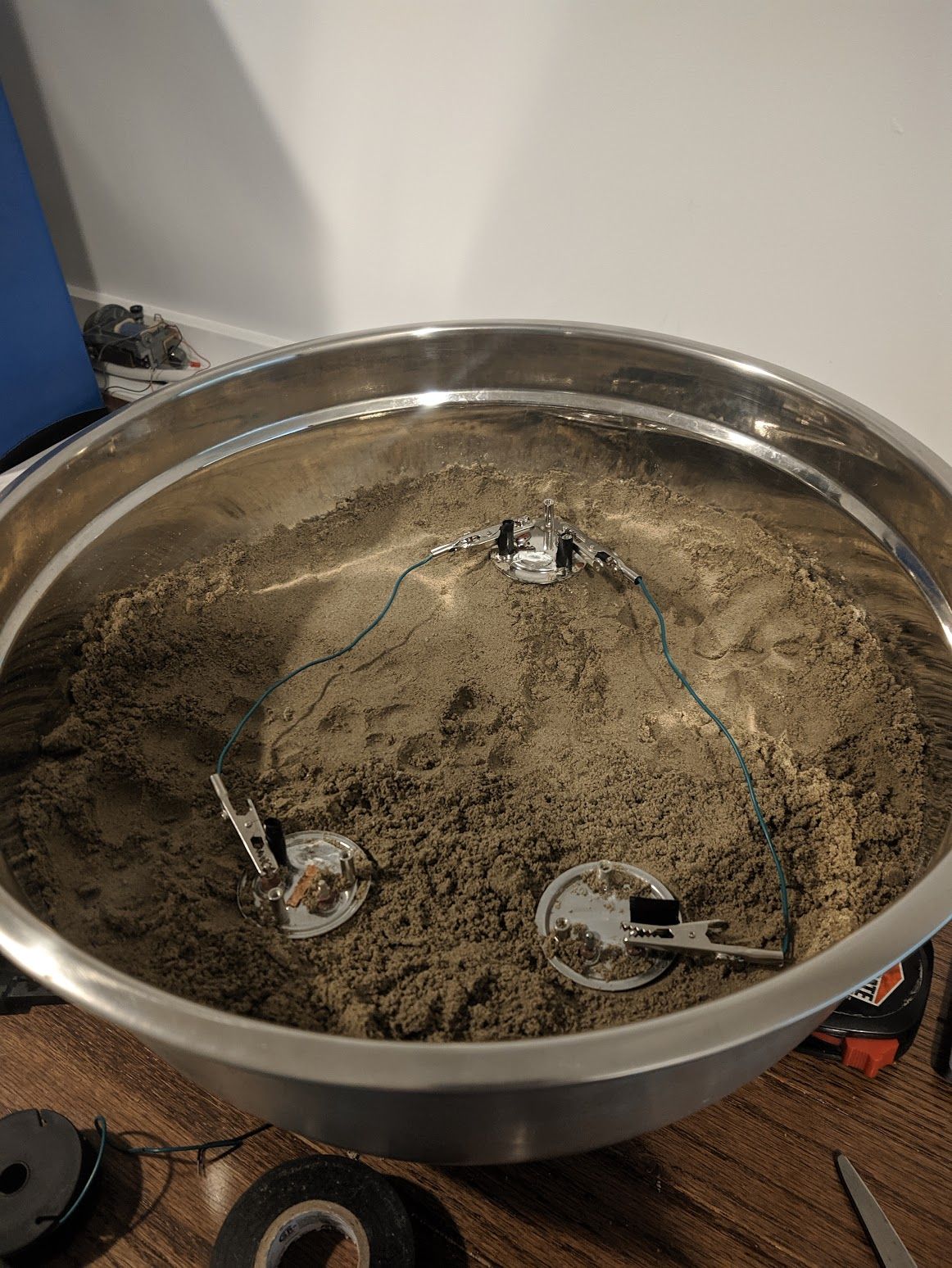
The first step to this project was to create the sand battery that I would use in my design. I went to Value Village, and got a nice big aluminium pot and some old kettles to use as heating elements, and mixed it in with some sand we had in our garage!
With the kettle heating elements, I was able to get the temperature up to about 260 degrees Celsius, when powered by a 120 volt outlet with the kettles in series (as heating elements are basically just big resistors designed to emit heat).
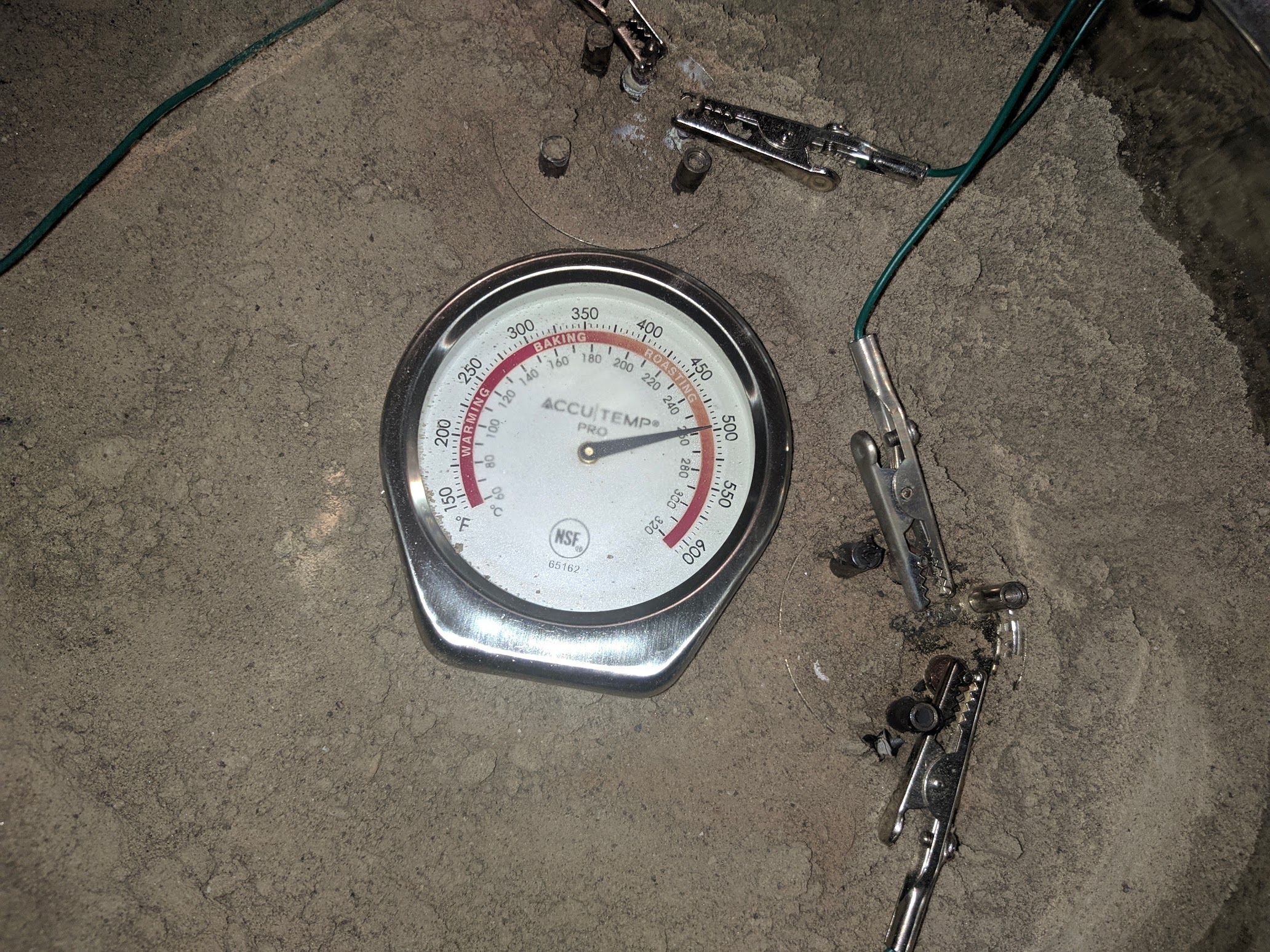
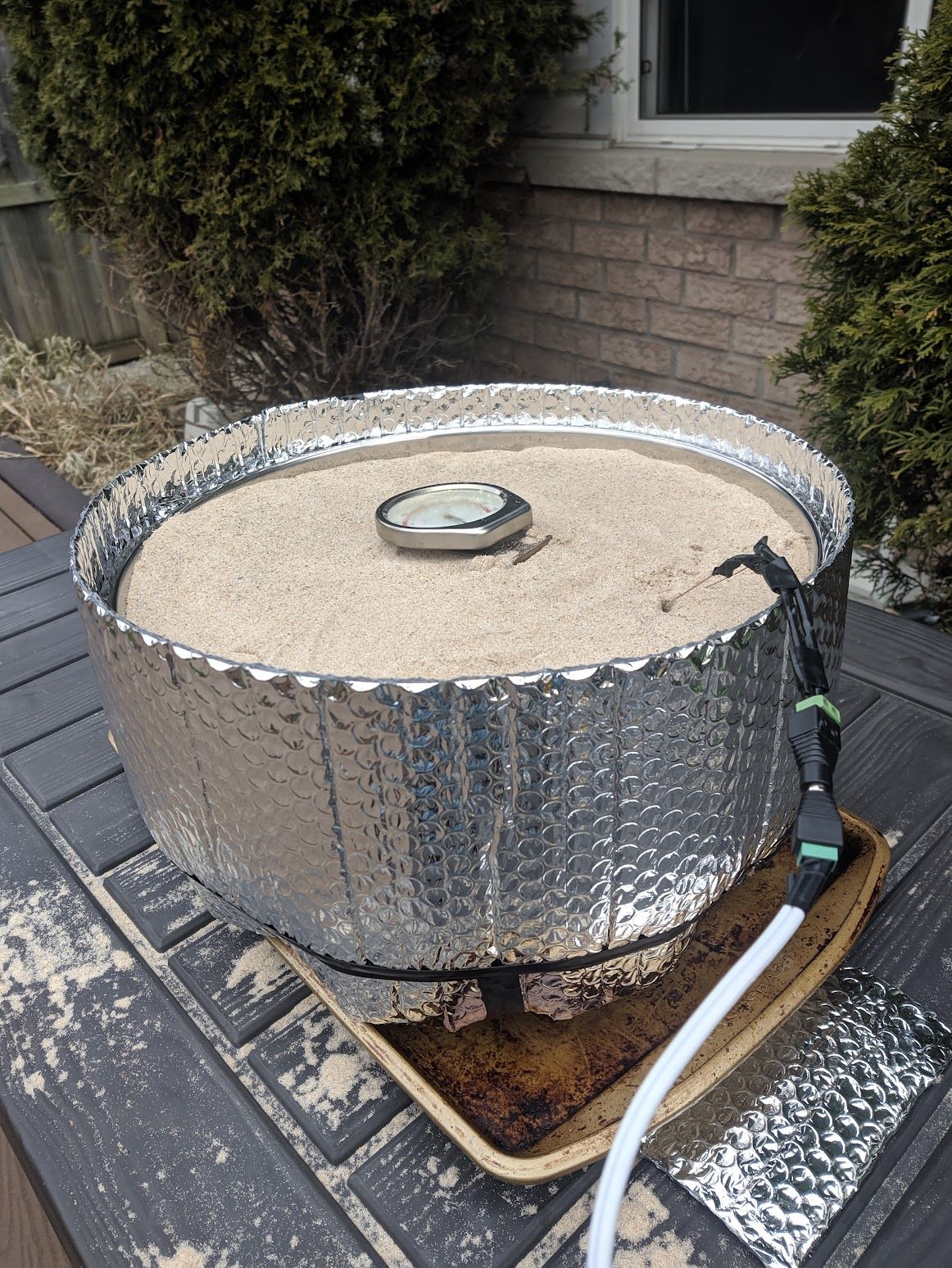
With the proof of concept working, I wanted to try and retain more energy, so I added some insulation to the aluminum pot and added a bunch more sand to top it off. I had a lot of trouble with the wiring, all the insulation from the wires would always melt off or start burning, I got it sorta working with electrical tape, but it could only go so far towards the sand before it started melting. I also didn't have a way to insulate the top, so that would definitely be a point for improvement, but so far I had not made it far enough into the project for that to matter. Also, the insulation I had was only good for up to about 220 degrees I think, and the inside layers were burning, so this layout wasn't going to work.
The next thing I tried was to use a cast iron pot, as it should be better at retaining heat compared to aluminium. In addition, apparently (who could have guessed), kettle heating elements only designed to heat water up to 100 degrees Celsius for a short period, are not great at withstanding over 250 degrees Celsius for long periods of time, and all three eventually started crumbling and breaking, so I made the switch to an electric stove top heating element from Home Depot!
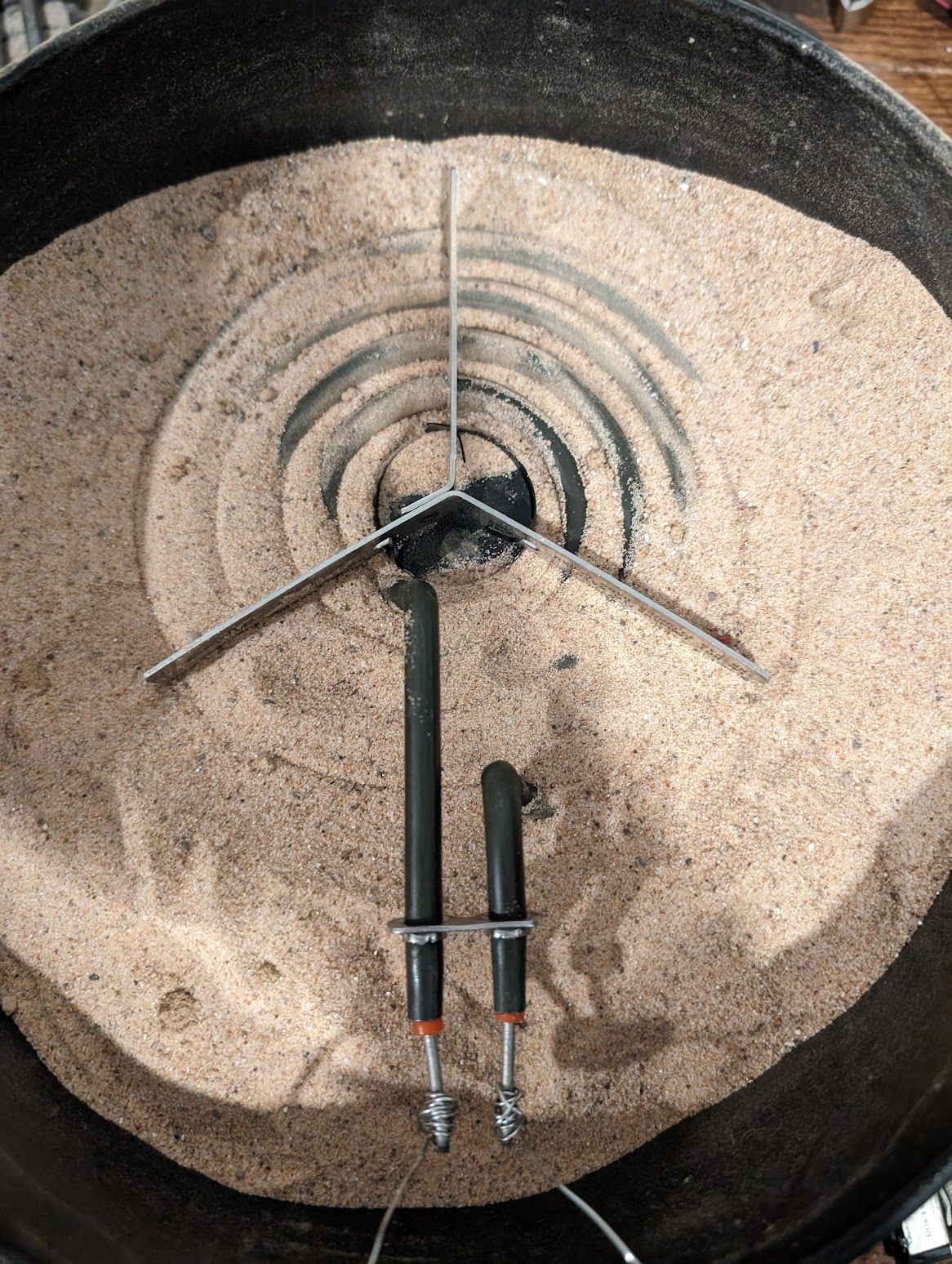
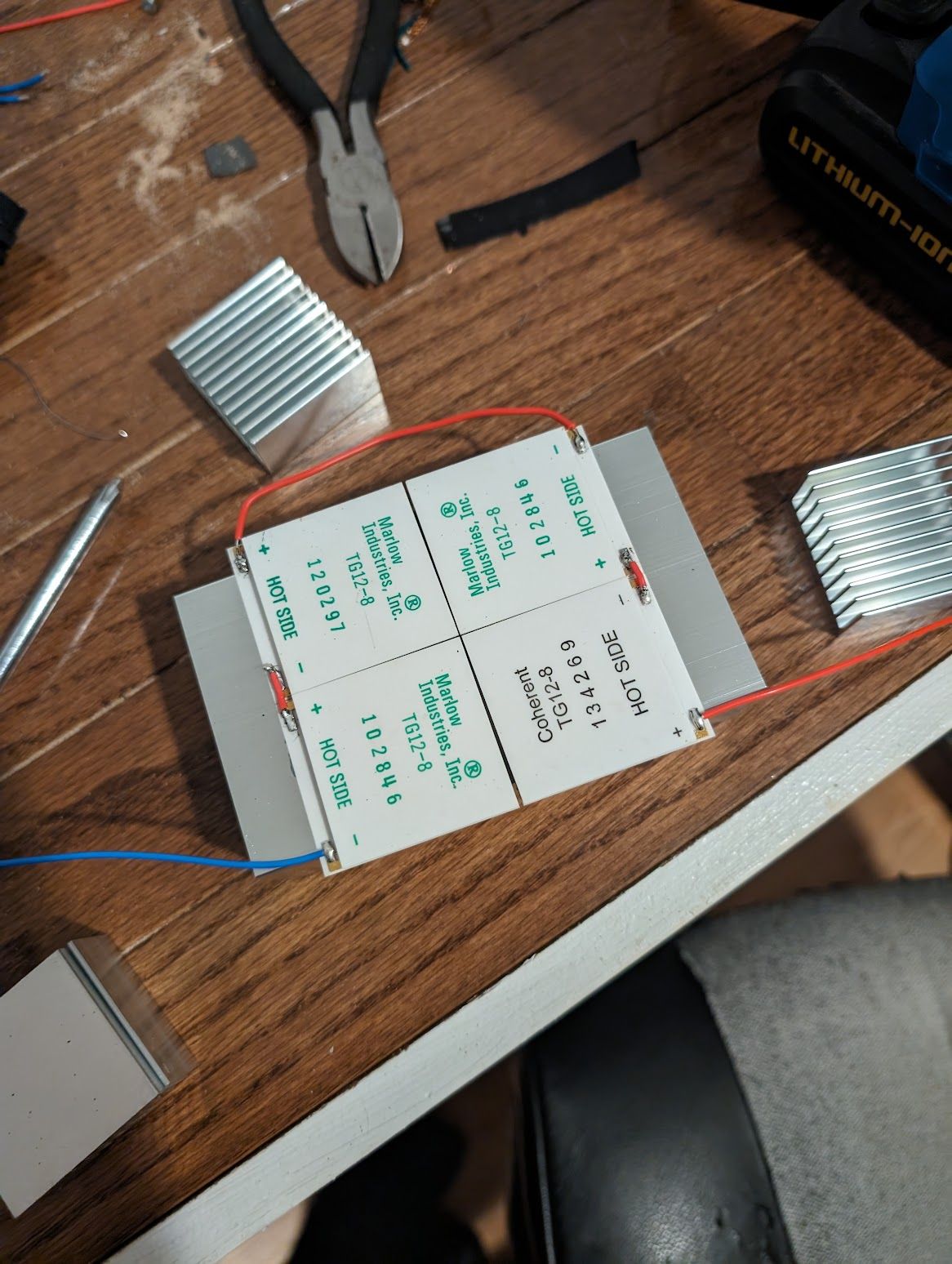
Now that I had a decent source of heat, or at least one that could get me by, I started looking at ways to extract this energy. The original way I was thinking about getting this energy was with Peltier modules, which contain an alternating lattice of metals, where when a temperature difference is applied, electricity flows through the circuit.
I originally just started with four Peltier modules, but that was not nearly enough power I need to power a motor, or even an LED light, so I got some more. There was still nowhere near enough power to get a motor going, but at least I got an LED powered only off of thermal energy!
The problem with Peltier modules, that I didn't realize when I started working on this project, is that they are SO inefficient, below 10%, so a large portion of the heat I had was wasted, so I don't think I'll be using them again. The next thing I want to try is using a stirling engine, which is a heat powered engine that directly converts thermal energy into mechanical motion, without first converting to electricity! I thought that using a stirling engine would work much better, but back in Grade 12 I did not have the skills or the knowledge to build and manufacture one myself, so I took a pause from that project. Two years later, now at the end of 2025, I have much more knowledge about design and manufacturing from my first year and a half at UofT, and I am feeling ever more confident in my ability to work on this project again soon!
I don't know if anything will ever come from this project, I know a lot of people have researched stirling engines in the past (including NASA!) and not much has been done with them in the real world, but who knows, maybe I'll get somewhere! Even if this project is a failure in the future, I am still learning lots of valuable skills and making an attempt.
I am hoping to work on this project again in the summer of 2026, after I have learned about thermodynamics after my winter semester in second year!
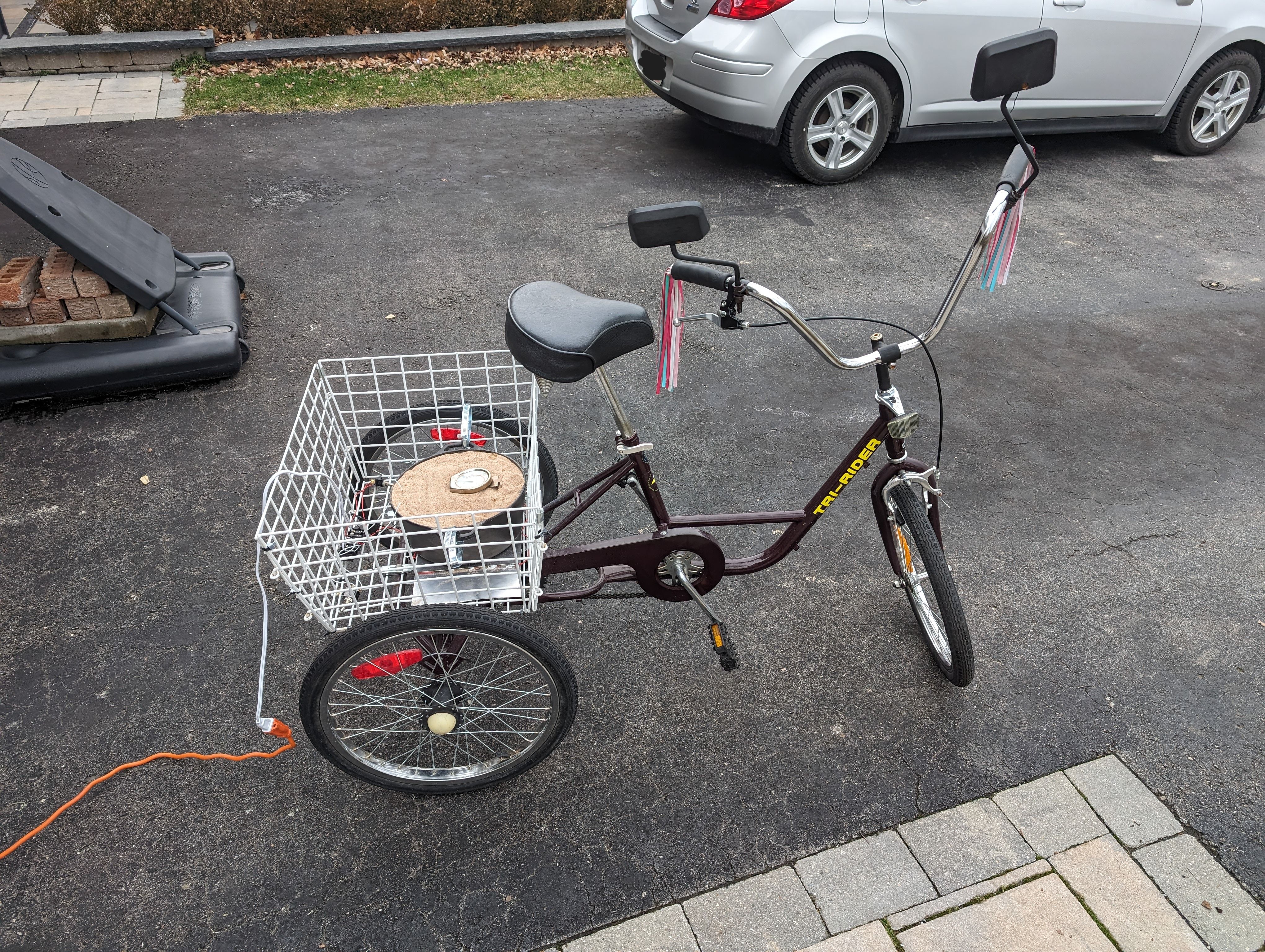
Even though I didn't get the energy output I wanted, I still mounted it to the tricycle to see if anything would happen, and it did! It was just so weak 💔 But better than nothing!!
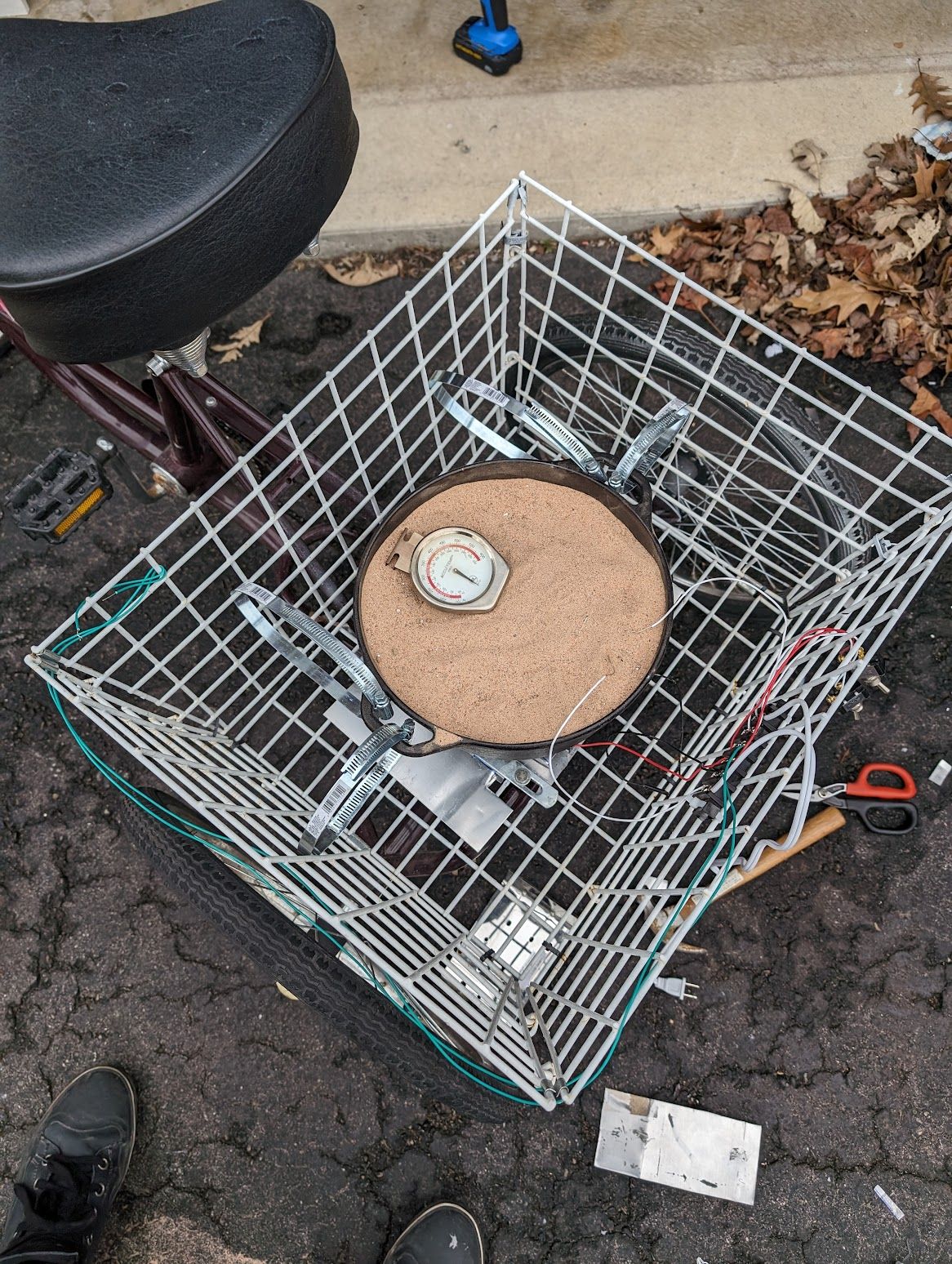
This project shows my research into my future area of interest, looking towards a more sustainable energy source for vehicles! It also highlights my passion for learning and trying new things, and not giving up when things are hard.